Personal Loan
Getting a loan approved is stressful. Applying for one shouldn't feel like filling out a form at a bank.
Users were eligible but the experience was losing them before they ever saw an offer.
ROLE
Sole Designer
TEAM
1 Lead
PMs
Devs
PLATFORM
Android
iOS
TIMELINE
Phase 1
2024




PROBLEM
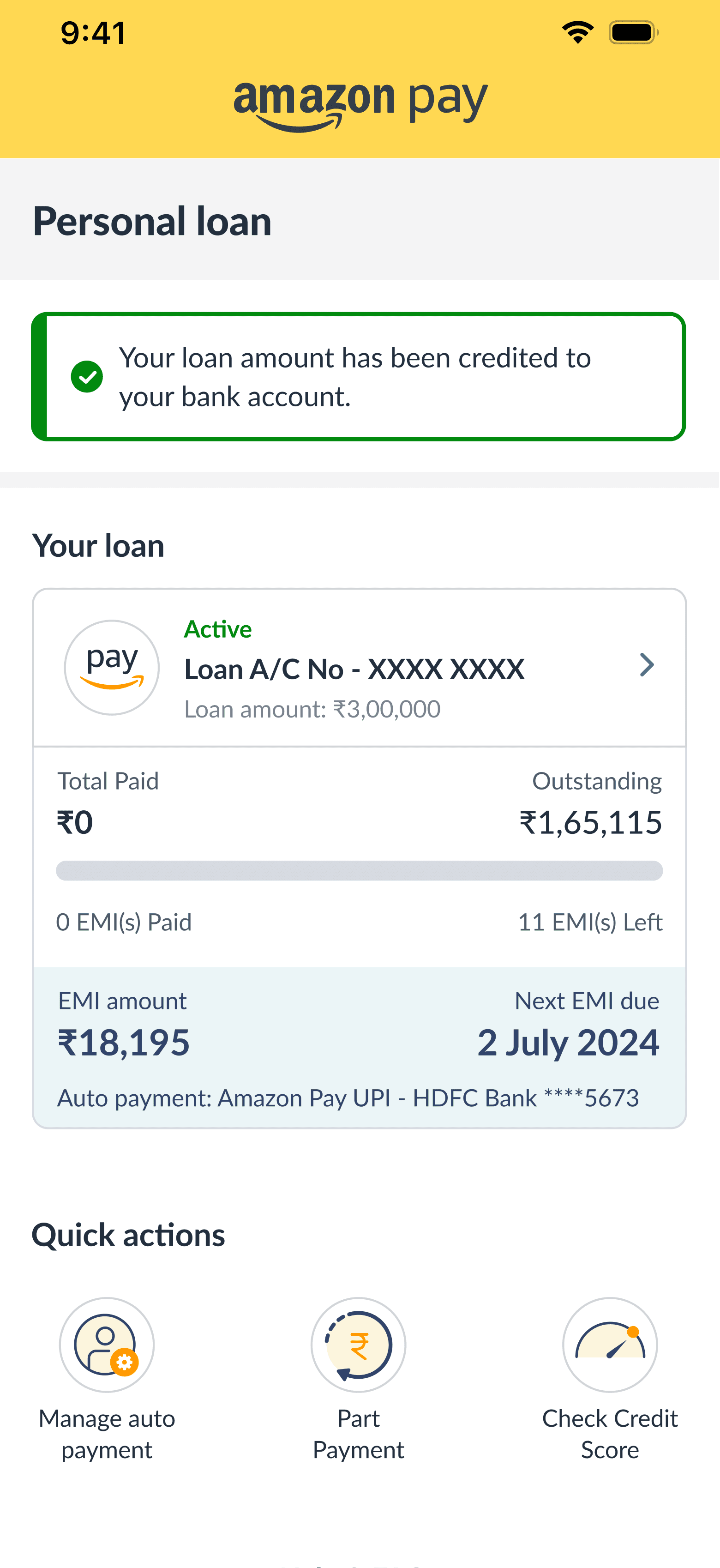
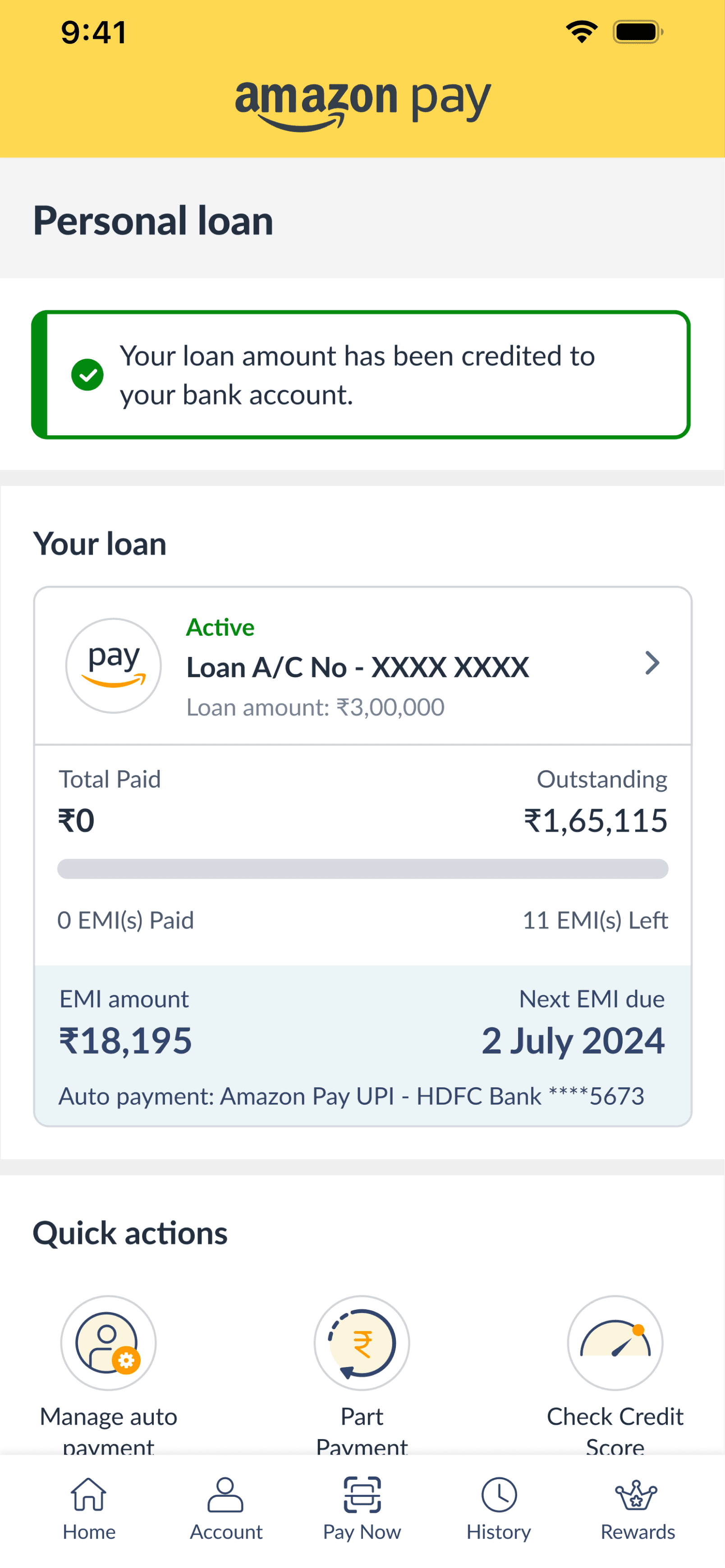
Amazon Pay wanted to offer personal loans to millions of users across India, many of them borrowing money for the first time. The form required identity verification, financial history, and KYC details. The kind of data collection that made people abandon before they ever saw an offer.
The scariest part of applying for a loan is not the rejection. It is the bank forms.
BEFORE - HOW APPROVAL ACTUALLY WORKED
Apply
Enter basic details
CIBIL check only
Opaque criteria
Approve or reject
No reason given
Dead end
No next steps designed
AFTER - THE NEW FLOW
Apply
Conversational steps
CIBIL + bank statements
Fairer criteria
Approved
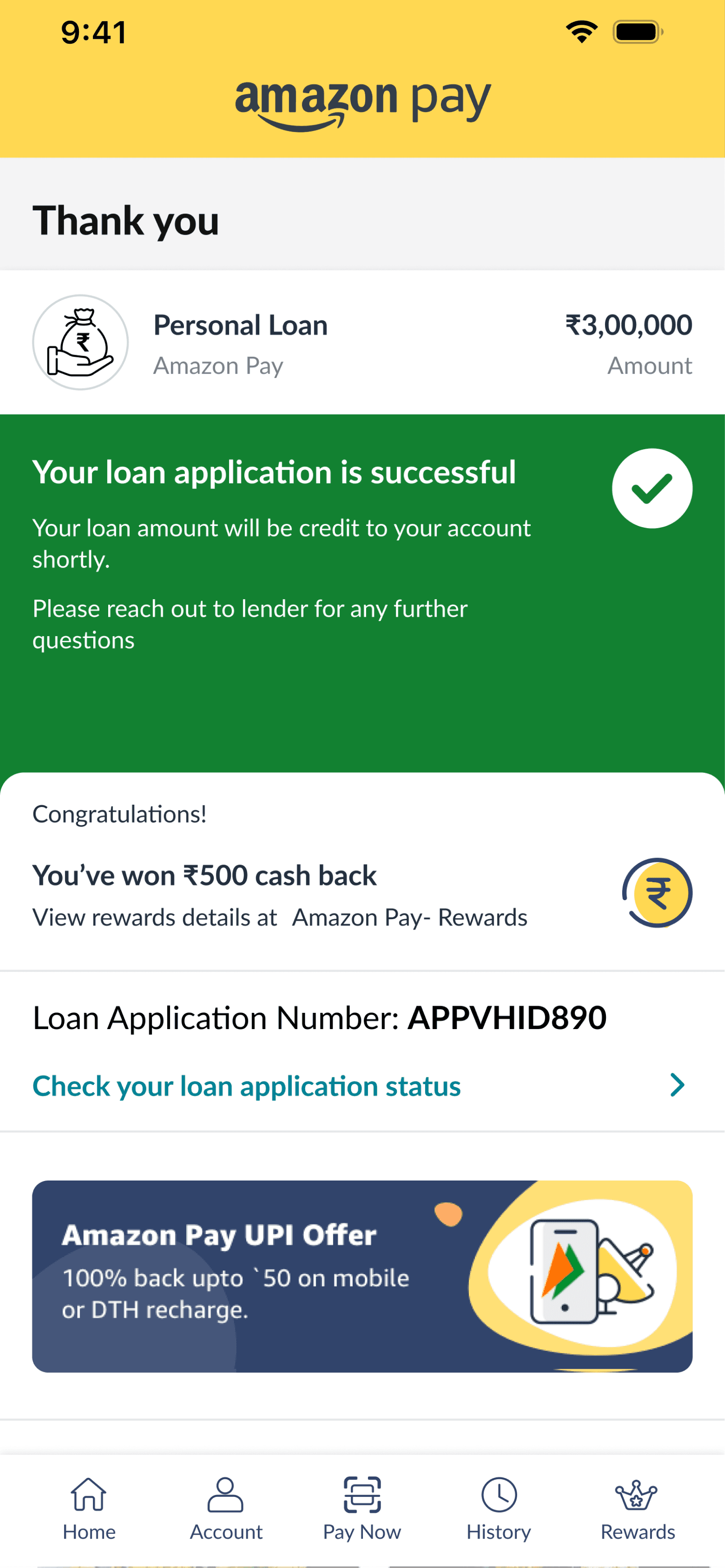
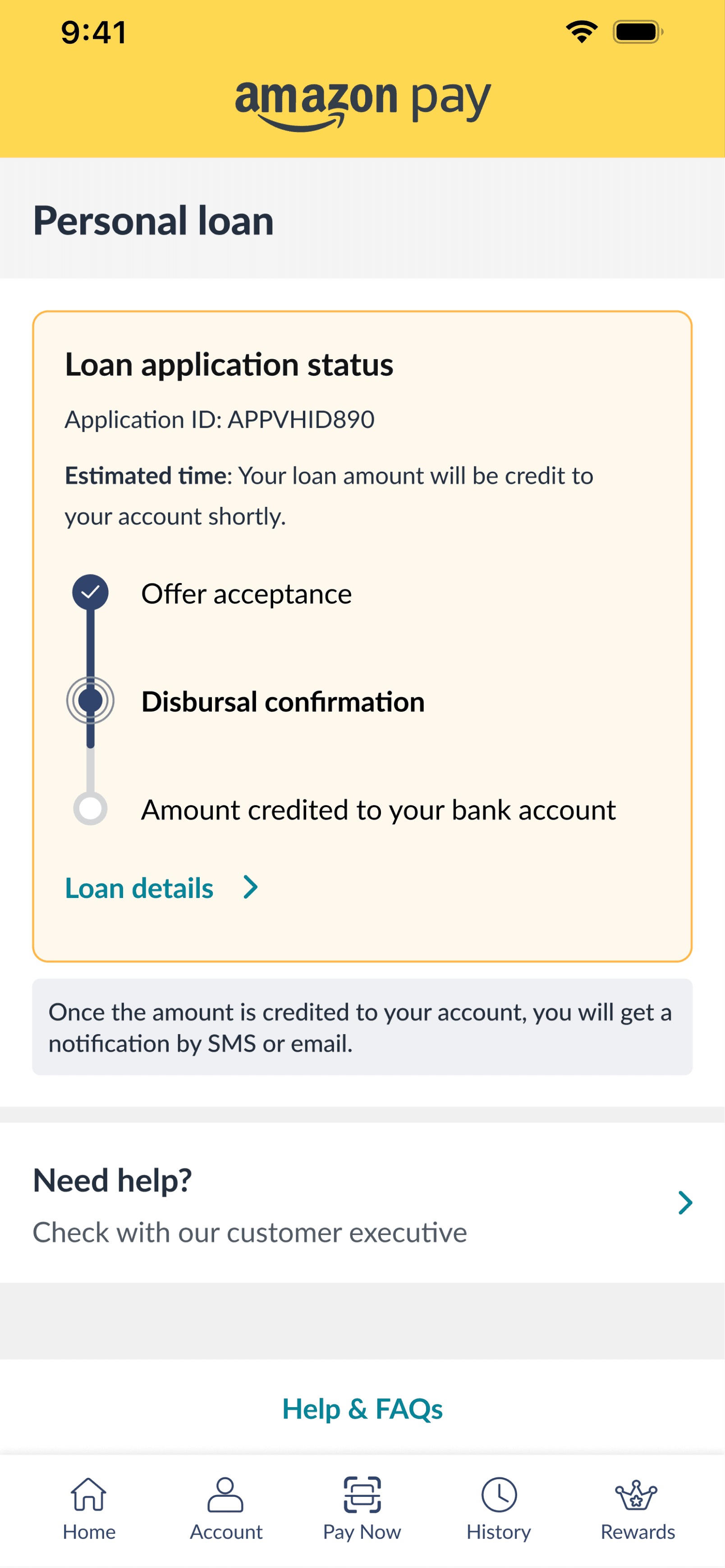
Clear offer + EMI
or
Rejected with reason
Specific + path forward
What we learned
Before designing a single screen, time was spent with real users, 150+ conversations across customer calls, support tickets, and usability sessions. One pattern appeared in almost every session.
"Everyone's process is different. Will I really get the money?" - User, usability session
Users were not abandoning because the process was too long. They were abandoning because they did not know what they were agreeing to. That single session changed how we framed every screen that followed.
150+
user conversations across calls, surveys, and usability sessions
7
competitor loan flows audited, none surfaced transparent EMI upfront
Working within the real world
Understanding what was impossible early meant the solution didn't get killed in engineering review.
RBI compliance, non-negotiable
Every data collection step was mandated by India's financial regulator. I could redesign how it felt. I could not remove what was required.
First-time borrowers
Most users had never taken a loan before. CIBIL scores India's credit scoring system, didn't always reflect their actual financial health.
0 to 1 product
There was no existing flow to iterate on. Every decision had to be made from first principles, including the rejection state nobody else had touched.
10M+ users at scale
Every interaction pattern had to hold at scale. Edge cases that affected 0.1% of users still affected 10,000 people.
The reframe
Each step felt like a natural next question. Identity verification and KYC felt seamless, and the compliance layer became invisible.
The decisions
Decision 01
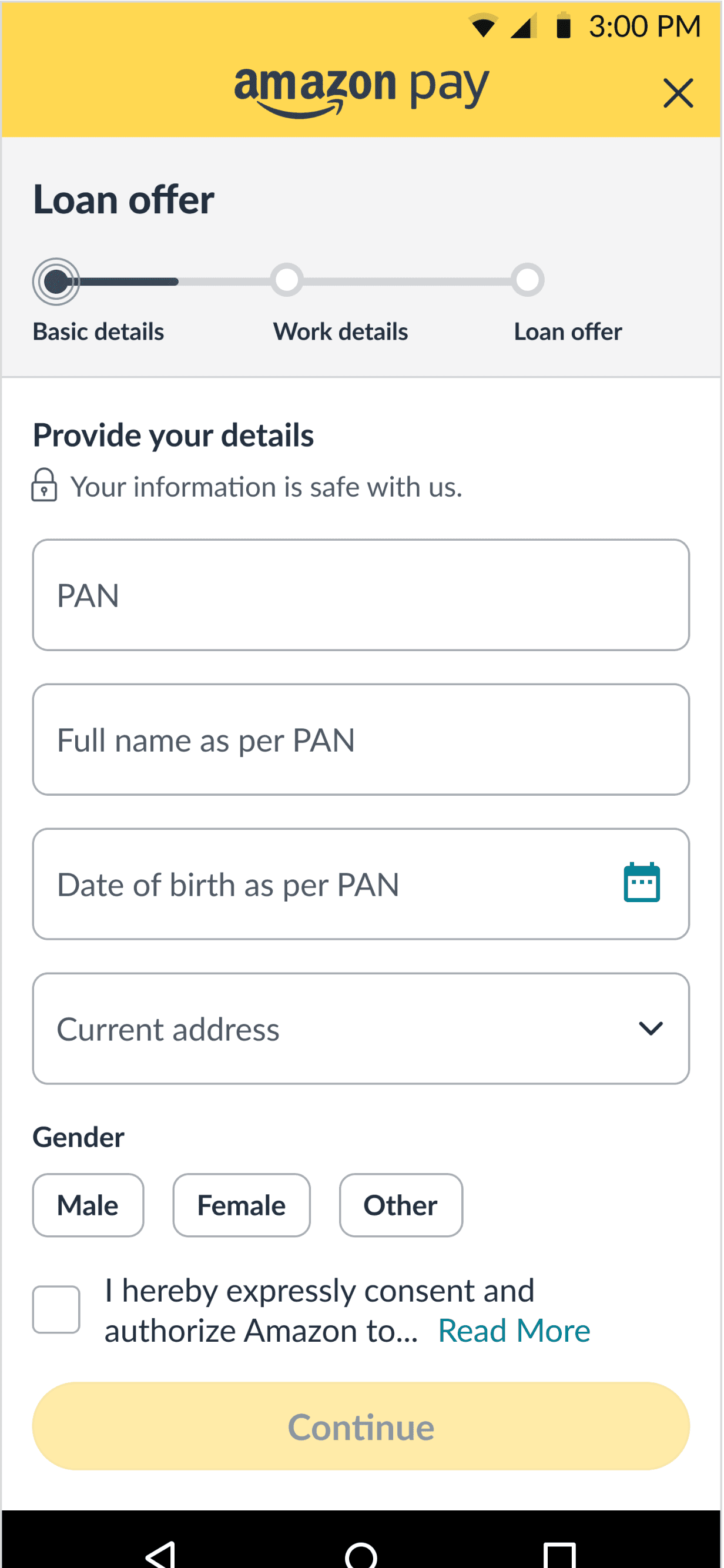
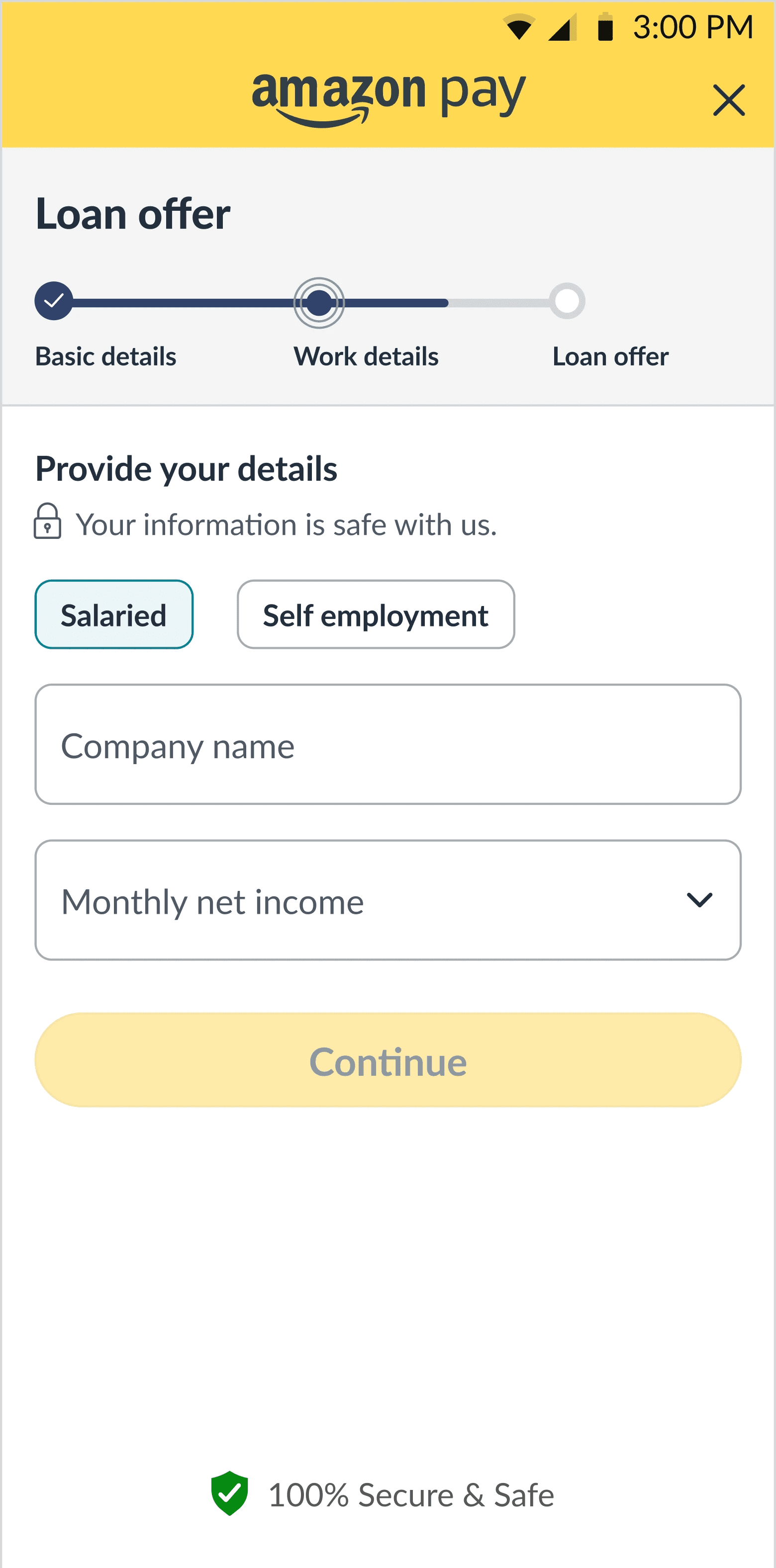
FORM AS CONVERSATION
Each step felt like a natural next question
Most loan forms front-load every requirement. I restructured the flow so each step had one question, a clear reason, and a visible reward for completing it.



Decision 02
THE TENURE SELECTOR
Users stopped guessing what they could afford. They started making a decision.
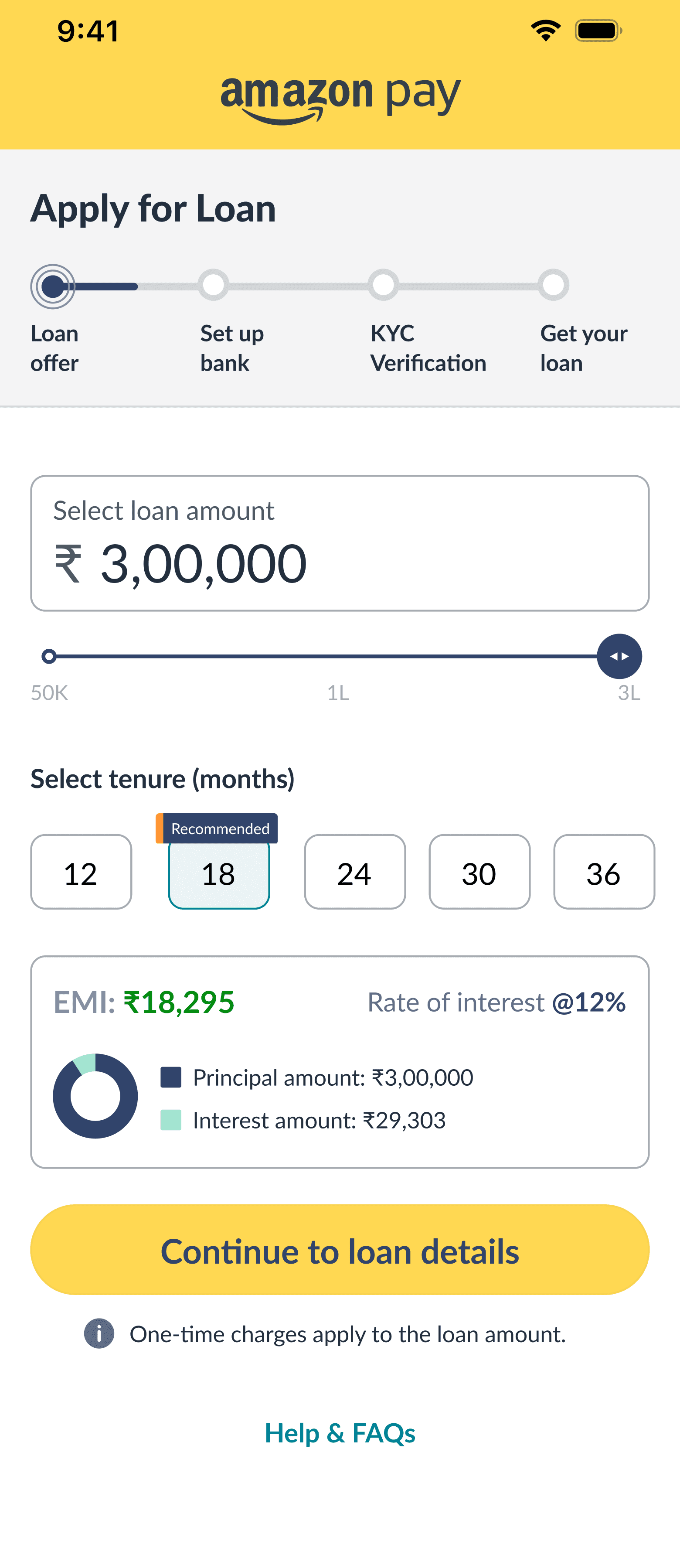
Most loan flows show a fixed EMI only after you commit. I designed a tenure selector where tapping any repayment period instantly updated the EMI and interest in a real-time pie chart. No submitting. No waiting.
Decision 03
DESIGNING THE REJECTION STATE
The screen nobody wanted to design.
REJECTED STATE
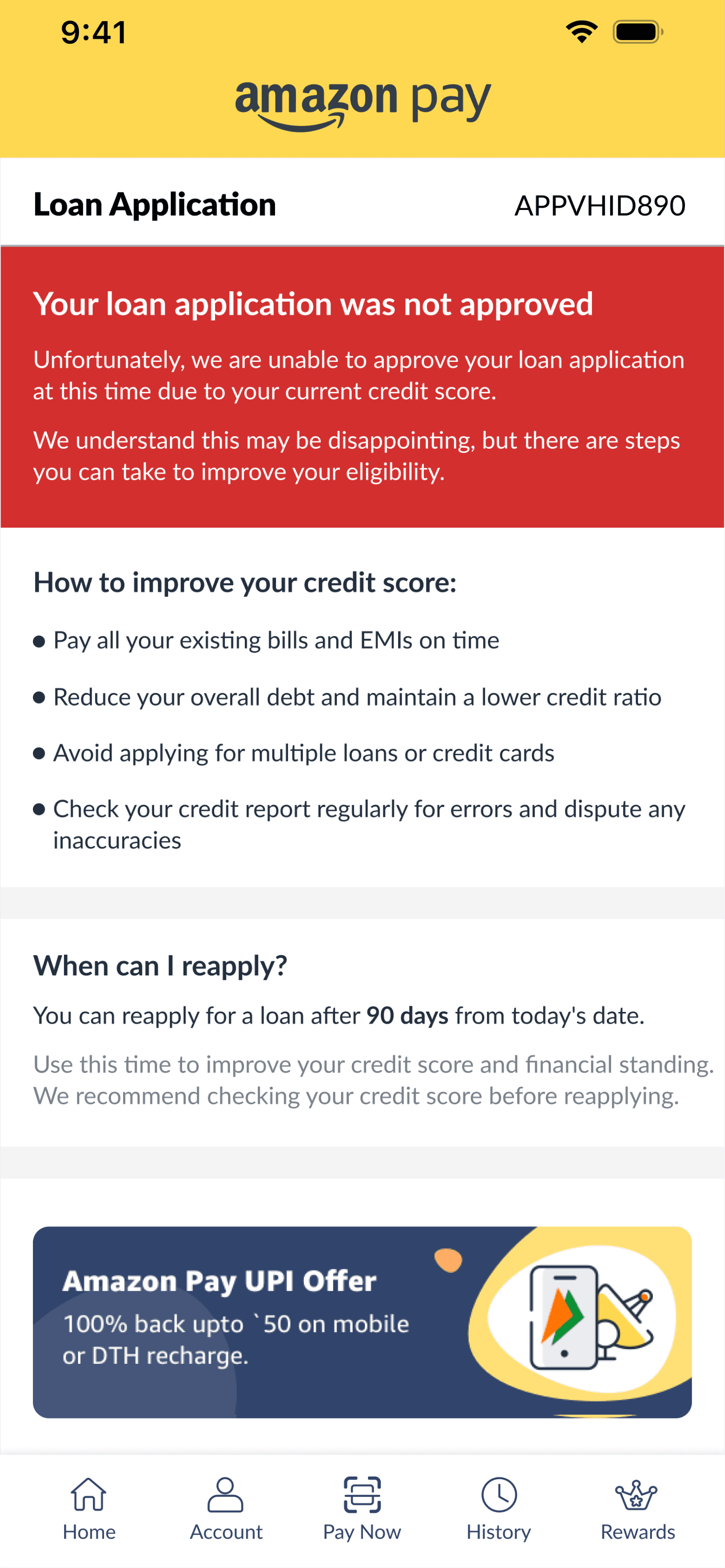

① Specific reason
Not "application denied." The user sees exactly why, including their credit score, with a clear and respectful tone.
② Clear improvement path
Four concrete actions to improve eligibility, no vague “try again later.” This is the part no competitor designed.
③ Reapply timeline
"90 days" gives users a specific date to work toward. The dead end becomes a runway. No other fintech product we audited did this.


This project is under NDA.
What you have seen is what I can share.
Curious about the decisions behind it?
Mail @
Copy component
Copied
aishwarryabp07@gmail.com


